Nov 7, 2025
How Long Is Too Long? Understanding When Your Period Isn’t “Normal”
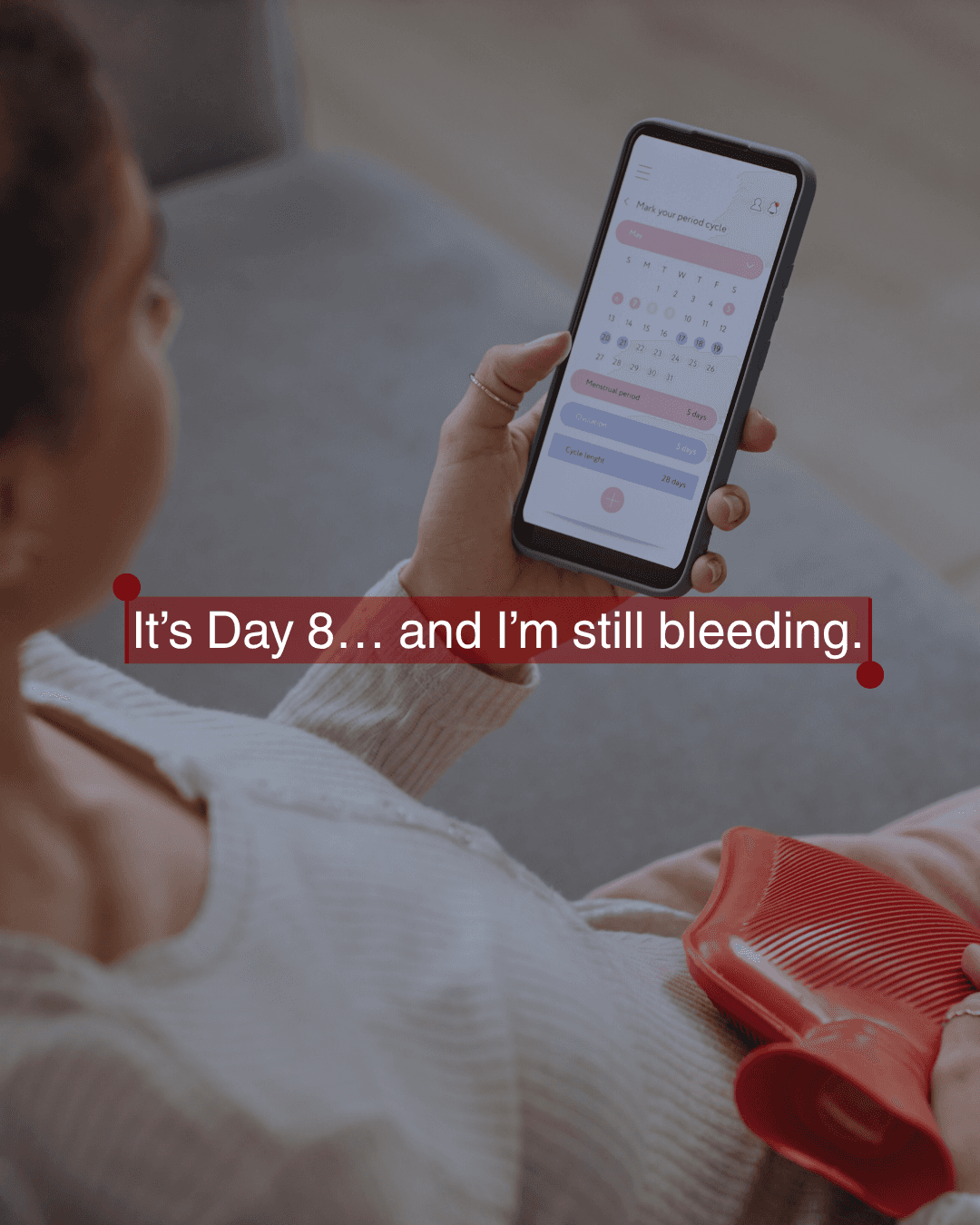
You start bleeding on Monday. By Sunday, it’s still going. You tell yourself, “Maybe my cycle’s just longer this month.”
Sound familiar? Many women shrug off long periods, assuming it’s just how their bodies work. But here’s the truth: If bleeding lasts more than 7 days, your body is waving a flag that something’s out of balance.
Why duration matters
A normal menstrual cycle is your body’s reset process. The uterine lining builds up, then sheds when pregnancy doesn’t occur. Ideally, this shedding is smooth and complete within a week.
When bleeding drags on, it may mean your hormones aren’t coordinating as they should. Oestrogen may be overstimulating the lining, or your uterus may not be contracting effectively to seal blood vessels. Sometimes it’s linked to conditions like fibroids, polyps, thyroid disorders, or clotting issues.
The emotional trap of “I’ve always been like this”
We’re conditioned to tolerate. To normalise. To keep going. So when our period extends beyond a week, we label it “a bit long” rather than “possibly abnormal.”
But consistency doesn’t equal normalcy. If your body has always struggled with prolonged bleeding, it might just mean the imbalance has always been there.
The problem is, prolonged bleeding doesn’t just drain your energy. It silently chips away at your iron stores, emotional stability, and mental sharpness.
How to track what’s happening
Start small:
Record start and end dates of every period.
Note any spotting days before or after. Yes, that still counts.
Watch how long heavy flow days last (more than three intense days can indicate imbalance).
Track fatigue, mood swings, and sleep patterns. They’re all connected.
Over a few months, you’ll begin to see patterns. That’s powerful data, both for yourself and your doctor.
Your body’s timeline matters
Imagine your body like a rhythm, an internal clock that regulates repair and renewal. When bleeding overstays, the body has less time to recover before the next cycle starts. It’s like running a marathon with no rest days.
You might not notice the toll right away, but over months or years, it can lead to exhaustion, anxiety, or hormonal crashes.
You deserve clarity
Many women only learn what’s “normal” after things go wrong, after anaemia, after fainting at work, after being told “why didn’t you come sooner?”
Understanding your body’s timing isn’t overreacting; it’s proactive care. You shouldn’t have to reach a breaking point to be taken seriously. If your period lasts longer than a week:
It’s worth checking in, not out of fear, but out of self-respect. Your cycle is your body’s communication system. The longer it speaks, the more it’s asking you to listen.
If this sounds familiar:
You’re not alone. Thousands of women are realising the same thing — that “normal” isn’t always healthy.
Your story helps make the invisible visible; helping other women recognise what’s happening and guiding better care for all. Every story helps highlight what’s under-researched and shows that “normal” isn’t always healthy.
Other Convo You Should Hear
More stories, more insights, more shared experiences, because every SilentConvo matters.